
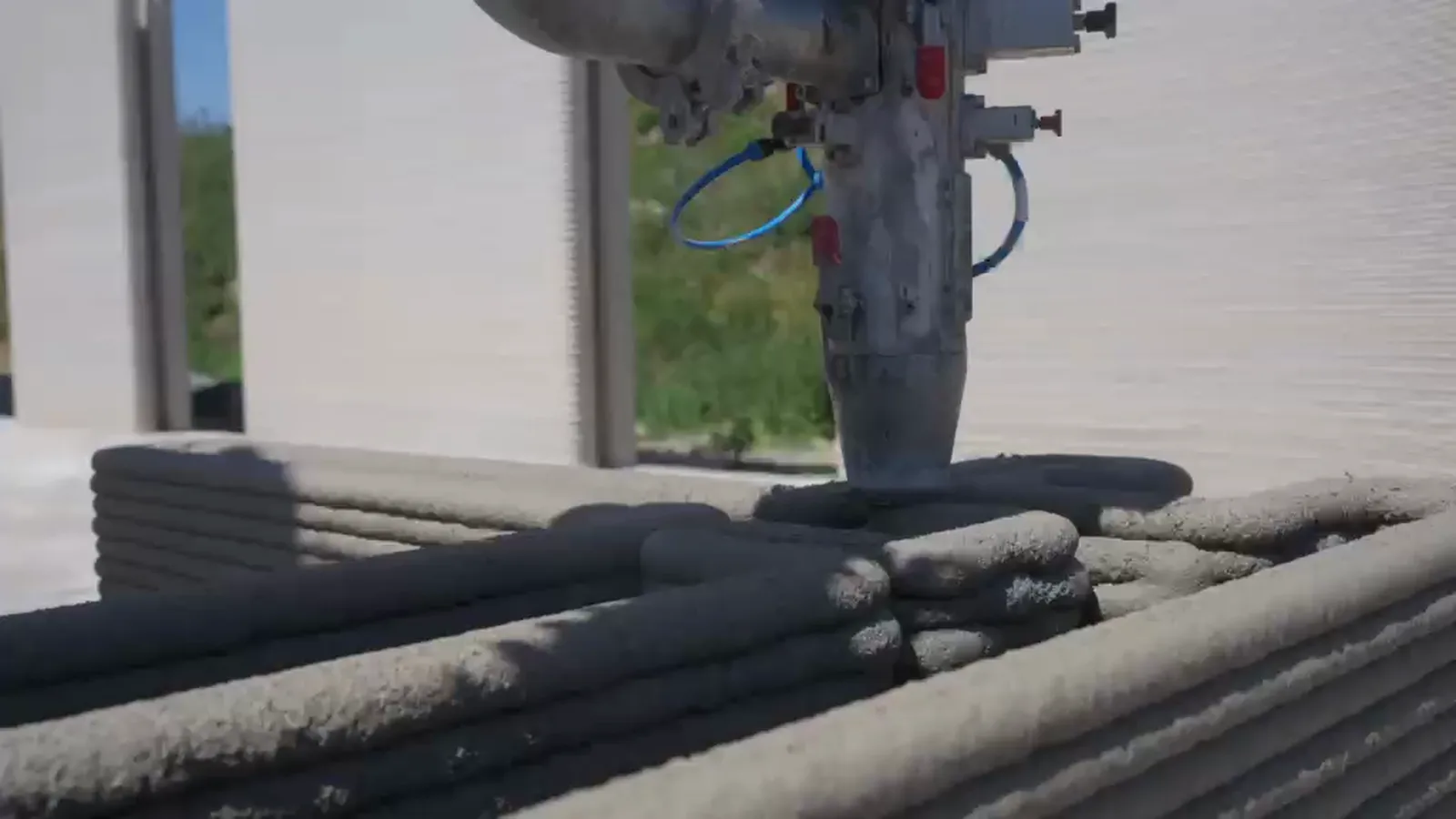
Close detail of extruded concrete layers on a printed wall.

Process

From Problem to Solution, a Network of Experts.

Every engagement runs through the same process. A standardized intake, a categorized problem, a matched expert or panel and one solution matrix delivered to your team.

01

Technical 3DCP Triage

We act as your ultimate 3DCP technology triage. When your project faces a structural wall failure, a material mix or pumping crisis, or you need a temporary operator familiar with your proprietary print system, we quickly mobilize a tailored strike team from our global network of experts to troubleshoot your complex jobsite or factory floor issue and find the cause and solution to your specific problem. Operating under your team's time constraints and utilizing our proprietary Uniform Expert Report System, we audit your technical data, diagnose the site environmental variables and deliver an integrated engineering and operational solution matrix directly to your team leader.

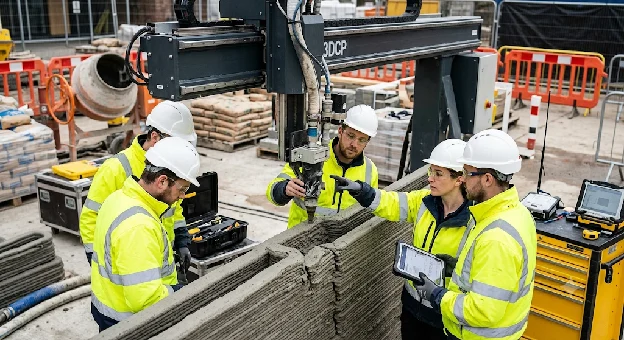
A strike team inspecting a printed concrete panel on a stalled jobsite.

02

Dedicated On-Call Project Oversight

Beyond emergency triage and single-issue problem solving, our consulting framework offers dedicated, end-to-end operational support for clients seeking continuous risk mitigation across the entire lifecycle of a 3D concrete printing project. When a client team becomes familiar with our capabilities, we can assign a specialized, bespoke strike team of experts, including materials rheologists, structural engineers and field operators, to support their project on an ongoing basis. From pre-print aggregate batching calibrations and G-code slicer reviews to live jobsite telemetry monitoring and real-time municipal compliance support, our assigned expert team acts as an embedded technical safeguard.

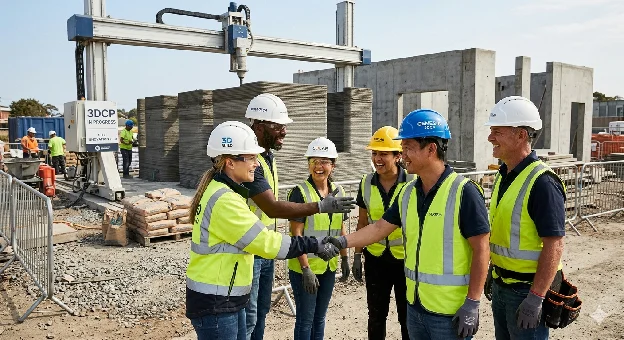
An assigned expert bench meeting the site crew beside a live printing gantry.

03

Regulatory and Permitting Assistance

Where the authority actually sits

When your 3DCP project faces a regulatory roadblock we can help you overcome it as well. Under the industry's current 3DCP regulatory and discretionary permitting framework, IBC section 104.11 and its alternative materials and methods provision serves as the gateway for approval of any novel, emerging technology. It is the general administrative provision affording local building officials authoritative technical benchmarks for discretionary 3DCP building plan approval. You meet that standard by satisfying both the requirements of ICC-ES AC509, which prescribes a strict evaluation of your printing technology, hardware system and materials chemistry to ensure structural performance, fire resistance and material durability compliance, and the requirements of ICC 1150, the Standard for 3D Automated Construction Technology for 3D Concrete Walls, under which your structural wall system is evaluated against the latest American National Standards Institute accredited consensus standards for automated reinforced wall systems and layered extrusion mechanics. ISO/ASTM 52939 in turn focuses on the process (how the jobsite is operated). Engineers use it to satisfy the mandatory Quality Documentation requirements for the ICC-ES evaluation.
What we produce for you

We can help map and sync your project's technology, hardware, material chemistry and structural wall design to satisfy these standards and get your project permitted. We generate comprehensive On-Site Testing and Quality Assurance Exhibits, formatted specifically to your system and mix, to satisfy the mandates of Section 5 of the ICC-ES AC509 Quality Assurance Program. These include ready-to-execute field exhibits covering the required testing mechanisms: pre-print flow-table validation (ASTM C1437), continuous logging of interlayer open-time thresholds, and compliance with established parameters for post-print destructive core testing (ASTM C39 and C42).

When the official still says no

Should your project encounter a permitting roadblock, we can draw on our network of credentialed engineers and materials scientists to deliver authoritative, independent peer reviews, giving local building officials the confidence required to approve and permit your 3DCP project.

Should the framework change, as anticipated with the likely adoption of ICC 1150 into the IBC in 2027, we will be among the first to know and ready to guide you through the new permitting scheme.

In short, our Expertise-as-a-Service technical consultancy serves as your single point of contact, synthesis and accountability for solving your robotic concrete printing technical problems and regulatory hurdles.

What can go wrong

One intake.

Every one of these reaches the same front door.

The failure vocabulary. cold joint, layer delamination, interlayer bond, pump flash, nozzle clogging, mix instability, rheology failure, batch segregation, slump deviation, thixotropic rebuild, layer splitting, underfilling, buckling, macroporosity, calibration drift, nozzle wear, pump pressure, open-time overrun, G-code mismatch, wind velocity, ambient moisture, mix temperature, AC509, ICC 1150, IBC 104.11, ASTM C1437, ASTM C39, ASTM C42, AHJ rejection, peer review, load-bearing, defect attribution, root-cause, QAP exhibit, flow-table, core testing, aggregate optimization, 2K accelerator, slicer review, telemetry, layer tearing, print halt, feed line flash, conflict check, surface moisture loss, cycle time, extrusion width, green strength. Operational, material, structural and forensic. Four categories, decided at intake.

Categorization

A problem. A network of experts to solve it.

Your problem or issue is categorized and the right expert or team of experts assembled to address it.

CategoryWhat it covers
Operational and mechanicalPump or feed line flash, nozzle clogging, layer delamination, cold joint formation
Materials and chemicalMix design instability, rheology setting failure, batch segregation, slump flow deviation
Structural and code complianceAHJ permit rejection, AC509 non-alignment, load-bearing verification, structural peer review
Forensic AnalysisRoot-cause failure analysis, defect attribution

Response

How fast, in plain terms.

LevelTarget responseTypical use
Level 1 · Immediate Triage2 to 4 hoursActive jobsite stoppage, print halted
Level 2 · Express Advisory24 hoursProblem contained, decision needed
Level 3 · Standard48 to 72 hoursPlanned review, permitting, forensic work

Target response times. The Operational Control Center operates across all global time zones.

The OCC

The Operational Control Center.

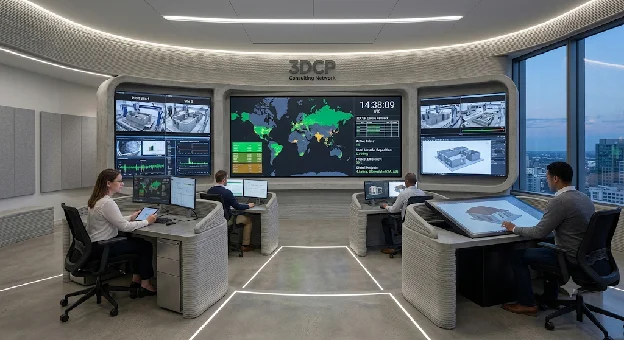
Operating around the clock across all global time zones, our Operational Control Center serves as the central hub for rapid-response technical support to digital robotic construction sites. From the moment a client intake request is received, the OCC immediately triages the issue, mobilizing and dispatching specialized experts, either on-site or via real-time remote telemetry, to resolve your complex technical challenge, minimize downtime, and keep automated projects moving forward without interruption.

The Operational Control Center monitoring live global jobsite telemetry around the clock.

UERS

The Uniform Expert Report System.

A standardized way to run a decentralized network of global experts and still deliver one answer.

01

Client Technical Intake Form

Captures project geography, hardware and software specification, batch telemetry, ambient atmospheric conditions and the precise nature of the breakdown. Submitted by phone, web or secure mobile portal.

02

Expert Diagnostic Questionnaire

Sent to the selected expert or panel with the relevant intake data attached, soliciting their initial technical assessment.

03

Standardized Consultant Field-Audit

A hardware log covering calibration drift, nozzle wear and pump pressure. An environmental log covering wind velocity, ambient moisture and mix temperature. A layer-open-time audit checking actual print execution against the digital G-code timeline.

04

Client Solution Matrix Report

The pooled findings synthesized into one executive roadmap, delivered to your founder or team leader.

Whether the experts are in Eindhoven, Austin, Dubai or Los Angeles, you receive one report, not four opinions.

Common questions

You have questions, we have answers.

Is this an engineering firm?

No. We are a technical consultancy. We assemble and coordinate independent experts, and we produce diagnostic and advisory reports. Where a project requires a stamped engineering certification, that is issued by the licensed professional performing it, not by the network.

How fast can you actually respond?

Level 1 intake, meaning an active jobsite stoppage, is 2 to 4 hours. Level 2 is 24 hours. Level 3 is 48 to 72 hours. The Operational Control Center runs across every time zone.

What is IBC Section 104.11 and why does it matter to me?

It is the alternative materials and methods provision. Because the International Building Code contains no dedicated provisions for 3D printed construction, 104.11 is the route by which a local building official can approve one. It gives them discretion, which means your approval depends on the quality of the technical evidence you present.

What is ICC-ES AC509?

The acceptance criteria used to evaluate a proprietary 3D printing technology, hardware system and concrete mix for structural performance, fire resistance and material durability. Satisfying it is how you obtain an evaluation report your building official can rely on.

What is ICC 1150?

ICC 1150 is the standard for 3D automated construction technology for 3D concrete walls, developed by the ICC consensus committee and expected to be adopted into the IBC around 2027.

My permit was rejected. Can you overturn it?

We cannot overturn anything. What we can do is identify why it was rejected, map your system and mix against the criteria the official is applying, produce the testing and quality assurance exhibits the Quality Assurance Program requires, and where useful provide an independent peer review from a credentialed engineer so the official has the basis to reconsider.

What causes a cold joint and can it be fixed after the fact?

Whether it can be remediated depends on where it is and what kind of load the wall is carrying, which is exactly what a field audit and a structural review determine.

Do you work on-site or remotely?

Both. Many issues are resolved from transmitted data, print logs and site video. Where the problem needs eyes on the wall, we dispatch a consultant to perform a standardized field audit.

Do I have to share my mix design and G-code?

For a meaningful diagnosis, usually yes. That material is treated as confidential, and the OCC performs a conflict check before any expert is assigned to your matter.

What if one of your experts works with my competitor?

Preventing exactly that is why the conflict check exists, and it runs before assignment rather than after.

What does it cost?

Engagements are scoped after intake, because a two hour remote review and an embedded oversight team are not the same commitment. Submit an intake or speak to the Operational Control Center and you will get a scope and a number before any work starts.

Who actually does the work?

A named expert or panel drawn from the network, matched to your problem category. Their disciplines and credentials are published in our network showcase.